Online vs In-Person Therapy: Which Fits You Best?
Choosing a therapist can feel like a big step. Choosing the format can make it feel even bigger.
When you're comparing online vs in-person therapy, there isn't a universal winner. The better option is the one that helps you talk openly, keep your appointments, and get the kind of support you need.
If you're unsure, start with the part that often matters most: what helps you show up?
Start with the version you'll use
Therapy only works if it fits into real life. That sounds obvious, but it's easy to overlook.
Some people have full schedules, long commutes, kids at home, or limited transportation. Others can make the time, but they know they won't speak freely from the kitchen table. The "best" format on paper may not be the best one for you.
It can help to think less about what sounds ideal and more about what feels doable. If you dread the drive, online sessions may remove enough friction to keep you consistent. If home feels distracting or cramped, an office may give you the structure you need.
One more thing matters here: your connection with the therapist. A strong working relationship often matters more than the platform itself. If you feel seen, respected, and understood, either setting can become a good place to do real work.
These questions can make the choice clearer:
| Question |
Online may fit better if... |
In-person may fit better if... |
| How easy is it to attend weekly? |
Travel, childcare, weather, or mobility make leaving home hard. |
Getting to the office is realistic and helps you protect the time. |
| Where do you feel private? |
You have a quiet room, headphones, and few interruptions. |
You don't have a confidential space at home or work. |
| How do you open up best? |
Talking from familiar surroundings helps you relax. |
Being in a shared physical space helps you feel connected. |
| What helps you focus? |
Home feels calm and comfortable. |
A separate office helps you stay present and grounded. |
If both columns sound true, that's okay. Many adults could do well in either format. Often, the deciding factor isn't the room or the screen. It's whether the setup makes it easier to keep coming back.
Why online therapy works well for many adults
For a lot of adults, online therapy removes the hardest part, getting there.
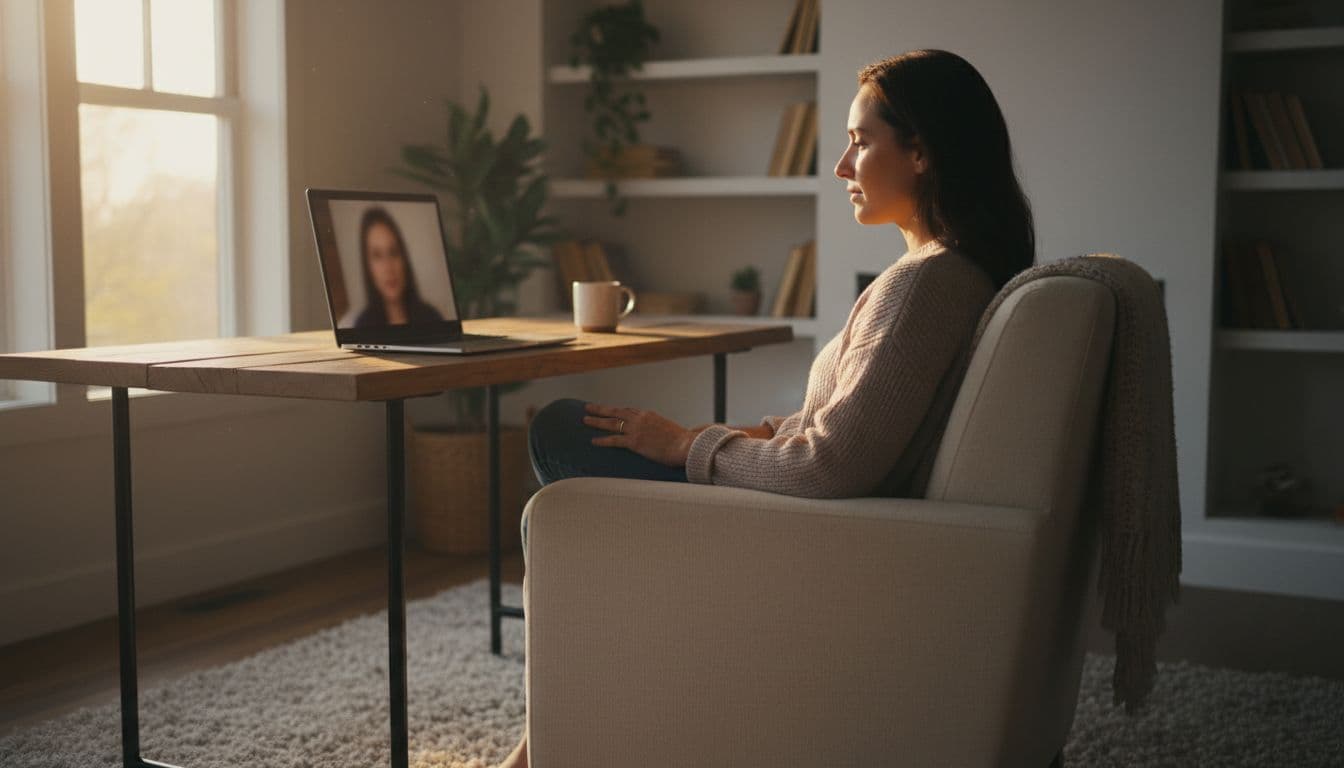
That can matter more than people expect. A session from home may save commute time, reduce scheduling stress, and make therapy possible during a lunch break, after a school drop-off, or while living far from a therapist's office. If you live in a smaller Colorado community, or simply don't want to cross town every week, virtual care can widen your options.
Research has become more reassuring here. Psychology Today's overview of online and in-person therapy points to similar outcomes and satisfaction for many clients, while also noting that fit still matters. A CMAJ review of remote versus in-person CBT found therapist-guided remote CBT was probably similarly effective to in-person CBT.
Online care may also be a strong fit if pain, disability, caregiving, or unpredictable work hours make office visits harder. It can lower the energy cost around therapy, which leaves more room for the therapy itself.
It can also feel emotionally easier at first. Picture someone who has never been to therapy, feels anxious in unfamiliar spaces, and worries about crying in front of a stranger. Starting from a familiar chair at home may lower the pressure enough to begin.
That said, online care isn't automatically the better choice because it's convenient. The same home that feels comforting for one person can feel full of interruptions for someone else. Convenience helps, but comfort, privacy, and connection still matter.
Why some people do better in the office
There is something steady about walking into a room that is set up for one thing only: your session.

For some people, that physical shift makes a real difference. You leave the noise of home, sit down, and let your body catch up with your mind. The office can feel like a boundary, a pause button, a place where you don't also need to answer emails, fold laundry, or listen for footsteps in the next room.
In-person therapy may fit better if you have roommates, thin walls, a busy household, or no place where you can talk without being overheard. It can also help if screens tire you out, internet problems throw you off, or you find it easier to connect when you share space with someone.
Some people like the sensory cues of an office too. A quiet waiting room, a familiar chair, tissues within reach, even the drive home afterward can help sessions feel contained instead of abruptly cut off by the rest of the day.
This isn't about saying office sessions are "more real." They're not automatically better. But for some concerns, or some personalities, the extra sense of presence helps. A person working through grief may want the ritual of coming in each week. Someone recovering from burnout after months at home may need a reason to leave the house. A couple may find it easier to stay engaged when both people are sitting in the same room.
One BMC Psychiatry study on virtual and in-person CBT reflects what many clients already know from experience: flexibility is helpful, but connection and technology issues can shape the experience. Preference isn't a side detail. It's part of the fit.
Practical issues that matter more than people expect
Cost, privacy, and logistics can tip the decision fast.
Online therapy isn't always cheaper. Some practices charge the same rate for both formats. Insurance coverage can vary, and telehealth rules can change. Ask about session fees, copays, cancellation policies, and whether the therapist can see you online when you're traveling. In many cases, the therapist must be licensed in the state where you are physically located during the appointment.
Privacy deserves a close look too. A bedroom with a closed door may be fine. A parked car may be the only quiet place you have, but it may not feel safe or comfortable for deeper work. Headphones help. White noise outside the door can help. Still, if you're spending the session whispering, that matters.
Technology is part of the decision too. If your Wi-Fi drops, your laptop overheats, or video calls make you feel drained, that frustration can chip away at the session. If tech feels easy and you already work well on screen, online care may feel natural within a week or two.
You don't have to pick a format for life. Many people switch, mix formats, or start one way and change later.
During a consultation, don't be shy about asking practical questions:
- Ask how the therapist handles technology issues and missed connections.
- Ask whether they offer both formats, or a hybrid option.
- Ask what kinds of concerns they often treat online, and when they recommend office visits.
- Ask yourself where you're most likely to be honest, focused, and able to return next week.
Sometimes the answer is seasonal or temporary. A new parent may start online because leaving home feels impossible. A remote worker with cabin fever may choose in-person because getting out of the house feels grounding. Someone recovering from surgery may move online for a while, then switch back later. Flexibility is a strength, not a sign you're doing it wrong.
When format is not the main issue
Sometimes the question isn't "Which type of therapy should I choose?" It's "What level of support do I need right now?"
If you're in crisis, worried you might hurt yourself, unable to stay safe, dealing with severe withdrawal, or overwhelmed to the point that daily functioning feels out of reach, a standard weekly session, online or in person, may not be enough. Immediate local help matters more than convenience.
That can mean calling 988 in the US, going to the nearest emergency room, contacting local crisis services, or reaching out to a trusted person who can help you get support quickly. If there's an immediate danger, call 911.
For online care, many therapists will also ask for your current location and an emergency contact at the start of treatment. That's normal. It's part of planning for your safety if something urgent comes up during a session.
Even outside of a crisis, some situations call for a closer look at the level of care. A therapist can help you sort that out, and a consultation is a good time to ask how emergencies are handled, what support is available between sessions, and when they would recommend in-person local care or a higher level of treatment.
Choosing between online and office-based therapy matters. Still, safety comes first.
Conclusion
The choice between online and in-person therapy doesn't come down to which format sounds better. It comes down to fit. The right option is the one that gives you enough privacy, enough comfort, and enough structure to keep showing up honestly.
If you're stuck, don't wait for perfect certainty. Start with the format that feels most doable now, and let the relationship with your therapist help guide the next step.