How Grief Can Change a Relationship, and What Helps
Grief doesn't stay in one room. It shows up during dinner, in the car, and in bed when sleep won't come.
That is why grief and relationships can feel so hard to understand. A romantic partner may seem distant, impatient, or unlike themselves. You may want comfort and also want to be left alone. Neither response means love has disappeared.
The loss of a loved one changes the rhythm of daily life. Naming those changes can make them feel less frightening and give couples a place to begin.
Key Takeaways
- Grief can affect patience, communication, intimacy, sleep, energy, and emotional regulation, so a partner may seem unlike themselves without love having disappeared.
- Partners may grieve differently. Small check-ins, direct requests, practical help, and consent-based intimacy can reduce guessing and emotional distance.
- Grief can change family, friendship, and work relationships as well as romantic ones. Clear requests and realistic boundaries can help others understand how to support you.
- Complicated relationships can bring mixed feelings, including anger, guilt, gratitude, numbness, and relief. These reactions deserve care without shame or pressure to create a simple story.
- Professional support can help when conflict becomes cruel, distance deepens, substance use increases, or daily life becomes difficult to manage. If a partner feels unsafe, prioritize safety and seek immediate local help.
How Grief and Relationships Change Under Loss
During loss and bereavement, grief can affect patience, memory, energy, appetite, sleep, and emotional regulation. A person who once talked easily may have few words. Someone who usually avoids conflict may suddenly snap over a small decision.
Different coping styles can be confusing. One person may stay busy with talking, errands, or work, while another needs quiet and fewer demands. The grieving person may feel unseen, while a romantic partner may misread a change in mood or availability. In romantic relationships, a quiet evening can start to feel like proof that something is wrong between you.
The oscillation model of grief helps explain how the grieving process moves between loss-focused attention and everyday responsibilities. You may spend one moment focused on the person who died, crying or replaying memories. Later, you may focus on bills, school pick-up, work, or a familiar show. This movement between loss and daily life is a common part of bereavement.
A person may laugh at breakfast, then cry in the grocery store. That doesn't mean they are "over it" or grieving incorrectly. It means grief isn't a straight line.
Physical closeness can change, too. Some people want to be held more often. Others feel overloaded by touch, conversation, or sexual intimacy. Try not to treat a change in desire as a verdict on the relationship. A gentle question is usually more helpful than an assumption.
Childhood experiences can shape adult attachment styles, and attachment theory offers a framework for how people seek or avoid closeness. Someone who learned that closeness is safe may reach for support; someone else may handle pain alone. These patterns offer language, not a diagnosis or a prediction.
A systematic review of adult attachment and prolonged grief found no evidence that insecure attachment patterns alone cause prolonged grief symptoms. Your past may affect how you ask for care, but it doesn't decide your future or your ability to heal together.
When Partners Grieve Differently
Two people can love each other and need completely different things after a loss. One romantic partner may want to talk through every memory. The other may wash dishes, take on errands, or focus on work because activity feels more manageable.
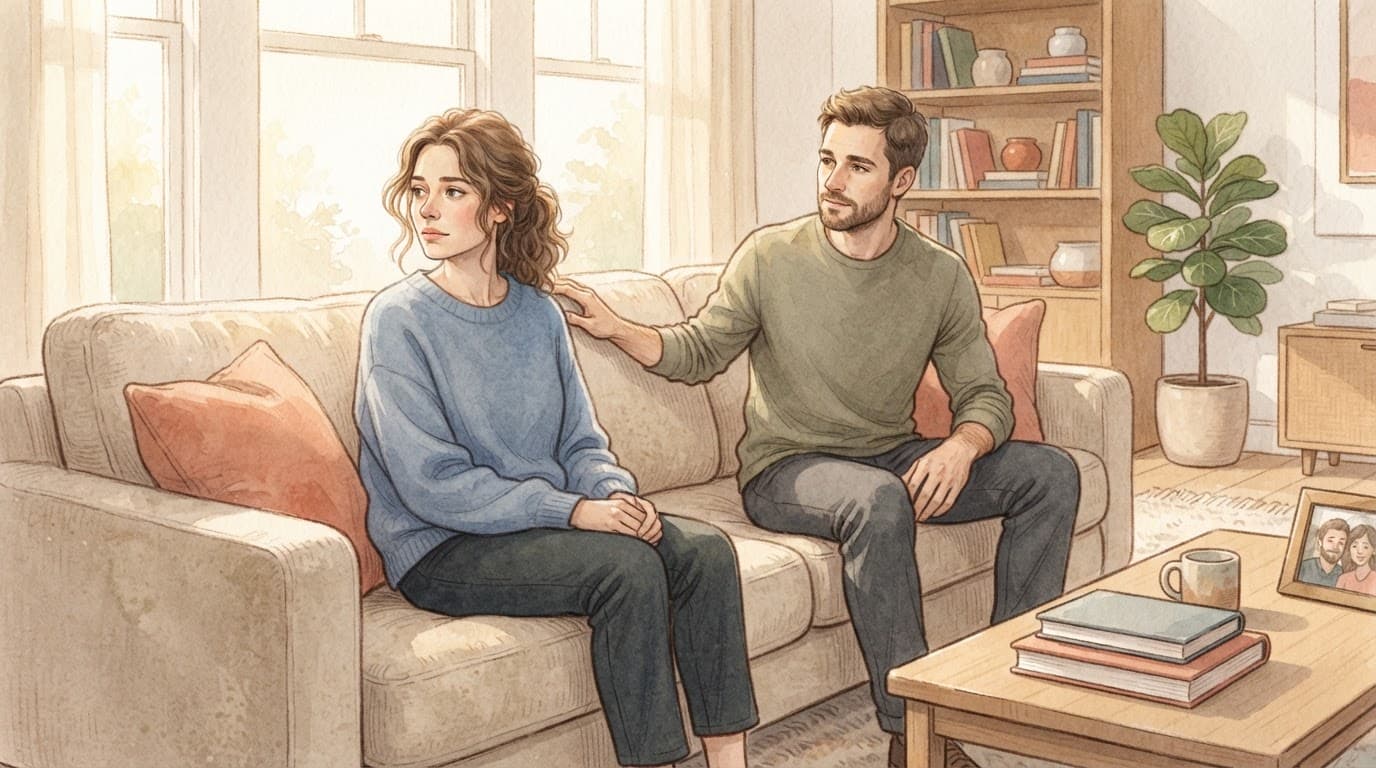 The partner who did not have the same direct loss may be grieving, too. They may miss the person, worry about their loved one, handle more responsibilities, or feel lonely in the relationship. They need care without making the bereaved person responsible for every feeling.
Emotional distance often grows when both people are guessing. Instead of waiting for the perfect words, keep the conversation small and clear. You might try:
- "I don't need you to fix this. Could you sit with me for ten minutes?"
- "I'm feeling shut out, but I don't want to pressure you. Is there a better time to talk?"
- "Do you want emotional support, practical help, or quiet right now?"
- "I miss being close to you. What kind of connection feels okay today?"
Grieving differently is not the same as grieving alone. The goal is not identical feelings. It is making room for both people.
If open-ended talks feel too heavy, set a brief check-in time and name different coping styles to reduce guessing and resentment. Ten minutes after dinner can be enough. Each person can answer three questions: What has been hard today? What helped even a little? What do I need tonight?
For intimacy, consent and patience matter. A hug, sitting close, or holding hands may be the right level of connection for now. It is okay to say, "I want closeness, but not sex tonight." It is also okay for the other partner to say they miss affection without asking for more than their loved one can give.
Grief and relationships often need this kind of plain, gentle honesty. Communication strategies such as small check-ins, direct requests, and consent-based intimacy language lower pressure to perform wellness or romance while life feels upside down.
Family, Friends, and Work Can Feel Different Too
Grief can reshape interpersonal relationships beyond the couple, including family, friendships, and work. Family dynamics may shift quickly after a death. One adult becomes the organizer, and carrying funeral plans, routines, and decisions can create emotional exhaustion. Another goes quiet. Old disagreements can return during funeral plans, holidays, or decisions about belongings.
Children need honesty they can understand, along with steady routines when possible. Simple language works best: "Grandpa died. His body stopped working, and he will not come back." Avoiding the truth can leave children to fill in the blanks with scarier ideas.
Let children ask the same question more than once. Offer choices without making them carry adult responsibilities. They can draw a picture, attend part of a service, or skip it. Adults can say, "I'm sad today, but you are safe and cared for."
Friends may pull away because they don't know what to say. They may fear mentioning the person who died or worry they will make you cry. That can still hurt. If you have the energy, make one direct request to your support network, such as a trusted friend or community-based helper: "I'd like company on Saturday," or "Please keep saying her name." Peer support groups can offer companionship from people with similar experiences, while grief support groups may provide a more structured place to talk about loss.
At work, grief can look like missed details, low energy, trouble concentrating, or a shorter temper. You do not owe coworkers every detail. A simple message to a manager can protect your privacy while making space for support: "I am grieving a recent loss and may need flexibility this week. Can we review the most urgent priorities?"
A caring manager can check in privately, adjust deadlines when possible, and avoid treating a performance dip as a character flaw. Coworkers can offer something simple and real: "I'm thinking of you. No need to respond."
Grieving a Complicated Relationship
Not every loss comes with uncomplicated love. You may be grieving a parent who hurt you, an estranged sibling, a former partner, or someone you loved and feared at the same time.
Sadness, anger, guilt, numbness, gratitude, and relief can all exist together. Relief does not mean you wanted someone to die. It may mean a period of conflict, caregiving, fear, or uncertainty has ended.
Unfinished business can make mourning feel especially painful. There may be no chance to ask a question, set a boundary, receive an apology, or say goodbye in the way you wanted. You do not need to create a polished story about the relationship to deserve support.
Research on adult attachment and complicated grief illustrates how attachment theory may help explain responses to loss. Relationship history can shape those responses, but it does not determine how a person will grieve. Grief counseling can help you hold conflicting feelings without forcing forgiveness, blame, or a timeline.
Sometimes grief comes out sideways. You may cancel plans, use alcohol or other substances more than usual, start fights, or push away the partner you most trust. These behaviors can be attempts to escape feelings that seem too big. Peer support groups may reduce isolation while helping you understand difficult reactions without judgment. They deserve care, not shame.
When Relationship Strain Needs More Support
Some strain is expected during the grieving process. Professional support and couples counseling can help when arguments become cruel, emotional distance deepens, silence lasts for weeks, or substance use increases. Reach out when hopelessness grows or daily life becomes difficult to manage, especially if mental health suffers. If a romantic partner feels unsafe, prioritize safety and seek immediate local help.
A grief counselor or couples therapist does not decide who is grieving "the right way." Using attachment theory, they can help partners understand protective patterns activated by loss. They can address unfinished business gradually, put hard feelings into words, and rebuild trust one conversation at a time.
The support partner also needs a place to rest. Talk with a trusted friend, consider peer support groups, keep one small routine, and take breaks without guilt. These self-care practices for grief and loss may offer a few gentle ideas when basic care feels hard.
At RAFT Counseling, adults, teens, and couples can receive support in person in Parker, Colorado, or through secure online therapy across Colorado. Couples therapy can offer practical help with communication, conflict, intimacy, and grief-related stress, without assuming every couple needs the same kind of care.
Frequently Asked Questions
Can grief change how a person feels about their partner?
Grief can change communication, patience, energy, physical closeness, and the ability to respond emotionally. These changes do not automatically mean love has disappeared or that the relationship is ending.
What if my partner and I grieve in different ways?
Different coping styles are common: one person may want to talk while the other needs quiet or stays busy. Brief check-ins and clear questions such as “Do you want emotional support, practical help, or quiet?” can reduce misunderstanding.
How can couples stay connected during grief?
Start with small, low-pressure forms of connection, such as sitting together, holding hands, or talking for ten minutes after dinner. Be honest about what feels possible, and use consent-based language around touch and sexual intimacy.
Is it normal to feel relief after someone dies?
Yes. Relief can accompany sadness, anger, guilt, gratitude, or numbness, especially after conflict, caregiving, fear, or uncertainty. Feeling relief does not mean you wanted the person to die.
When should a couple seek professional support for grief?
Consider a grief counselor or couples therapist when arguments become cruel, emotional distance lasts for weeks, substance use increases, or daily life becomes hard to manage. If a partner feels unsafe, prioritize safety and seek immediate local help.
A Relationship Can Hold Grief
Loss may change how you speak, touch, sleep, and make plans. Unfinished business may remain, but it can be approached gradually, not solved all at once.
Healthy grief doesn't require identical reactions, constant closeness, or a return to the old normal. Grief and relationships can make room for tears, quiet, anger, tenderness, and moments of laughter.
The most helpful question is often not, "Why aren't we back to normal?" It is, "What would help us feel less alone today?"